Mission: SAVE Grandfather Tree with 'Biochar
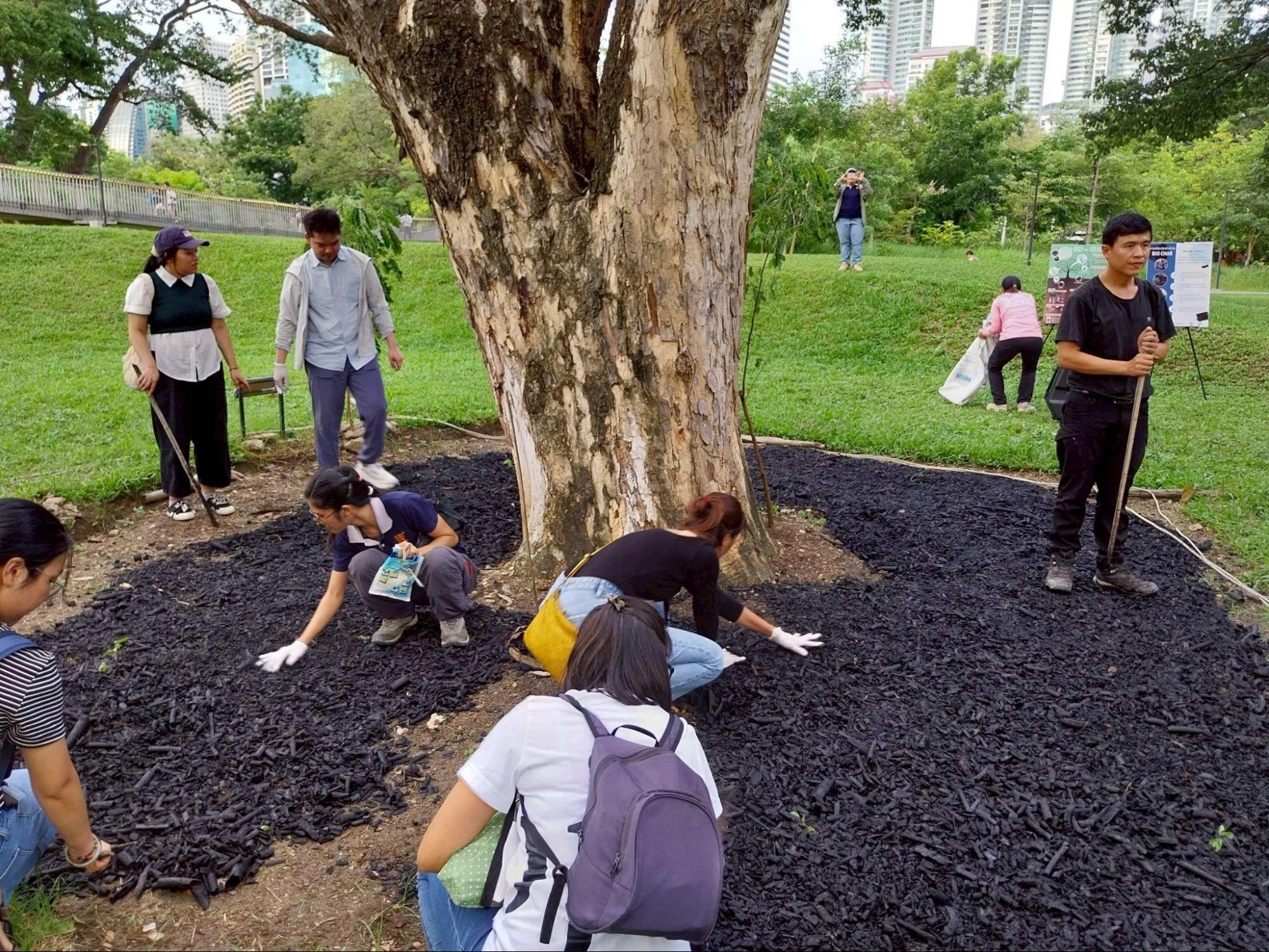
Ancient trees that have stood for decades or even centuries are not unlike a “kind grandfather” who has long given us shade and clean air. But because of their great age, without proper care their branches and trunks may weaken, risking collapse and causing danger.
Across Thailand today, there are many such grandfather trees that need special attention. Simple, conventional care — just watering and fertilizing — is no longer enough, because countless factors can weaken a tree: soil that is too compacted, an unfavorable surrounding environment, and various pests.
Over the past several years, BIG Trees has partnered with various networks to introduce an innovation called ‘biochar’ — a high-quality charcoal produced from leftover tree branches through a low-smoke burning process — to help revive large trees, enabling them to bloom and grow beautifully once again.
But beyond that, biochar doesn’t just address tree care. It offers many additional benefits and represents a sustainable, nature-based solution for the environment.
01 — From Branch Clippings to World-Changing Charcoal
One thing that frustrates many people when pruning large trees — whether at home or in public parks — is not knowing what to do with the enormous pile of branches left behind. Each haul for removal costs no less than 4,000–5,000 baht per trip, and heavy pruning jobs can run into the tens of thousands.
Moreover, the problems don’t end once the branches reach the waste facility. Smaller branches fed into shredding machines simply pile up in mountains of chips — a process that also releases methane, a potent greenhouse gas. Branches too large for the shredder are simply left abandoned without any further processing.
BIG Trees recognized this problem and consulted Professor Emeritus Decha Boonkham, Chairman of the Board of the Big Trees Foundation. He suggested that rather than discarding the branches, it would be far better to burn them into biochar and use the result as a soil amendment — doubling the benefit — and noted it as a new alternative attracting global interest.
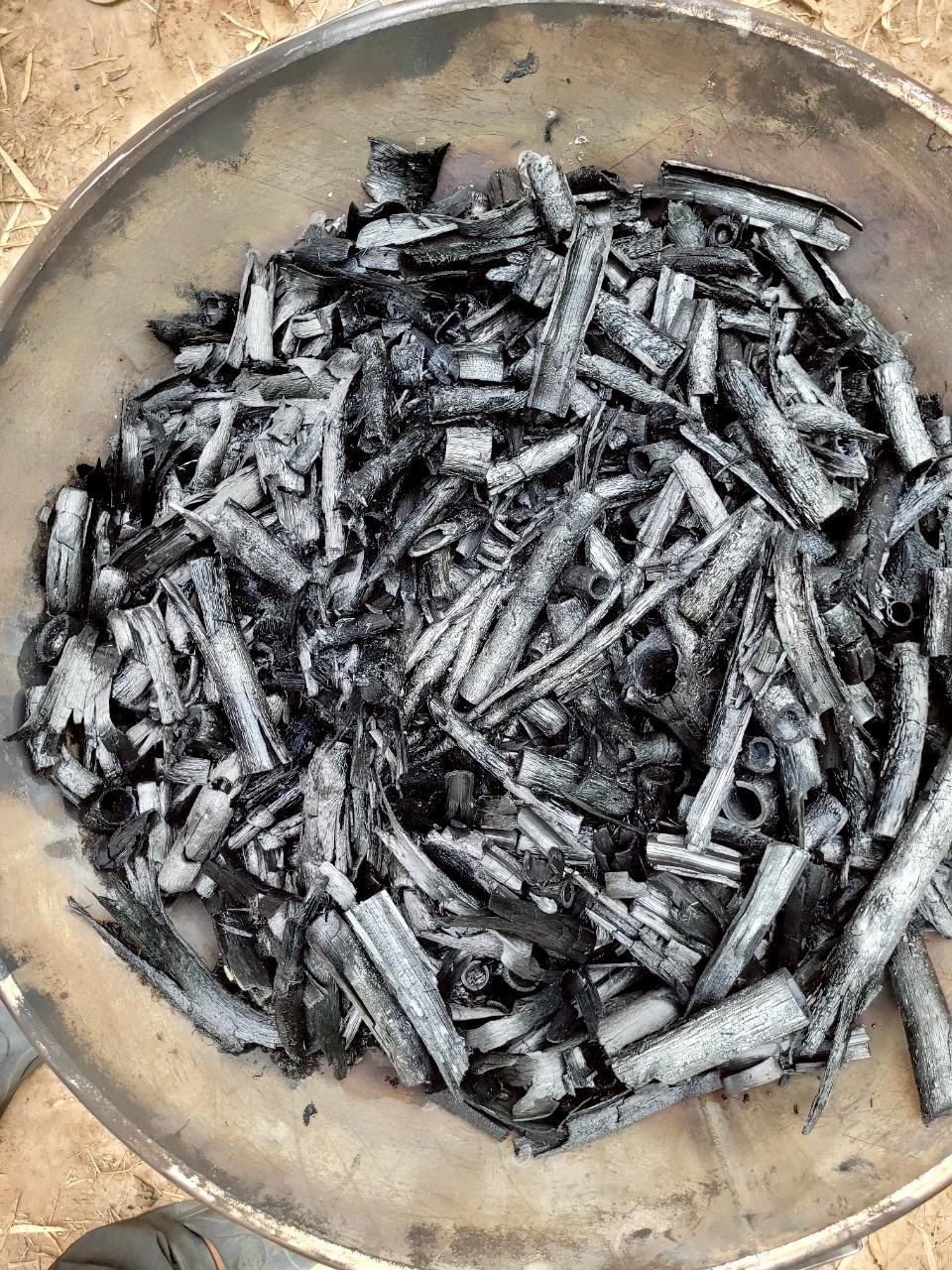
Biochar is a biological charcoal far more effective than ordinary cooking charcoal. It is produced by burning organic material in a limited or oxygen-free environment at temperatures of 500–600 degrees Celsius, until the carbon in the wood solidifies rather than rising into the atmosphere as carbon dioxide as it would in open burning. As a result, it releases very little pollution.
This process leaves biochar riddled with tiny pores throughout. When soaked in fermented biological liquid or organic fertilizer for around two weeks, it transforms into something like a sponge that absorbs nutrients and minerals within itself. When applied to trees, those nutrients seep out gradually, eliminating the need for frequent fertilizing — it can be left to work for years. Crucially, it also helps keep soil loose and well-aerated, with good drainage, reducing the problem of compacted soil that suffocates tree roots — the leading cause of large trees dying while still standing.
Producing biochar is not complicated, and the cost is not especially high. Farmers or various organizations can make it themselves with nothing more than a kiln and some practice learning the process.
Importantly, it also addresses the concept of Nature-based Solutions (NbS) — the idea of placing nature at the heart of solving problems across economic, social, and environmental dimensions to build long-term sustainability. First introduced by the International Union for Conservation of Nature (IUCN) in 2009, NbS was developed to confront the climate crisis, which grows more severe with each passing year.
BIG Trees brought this concept to discussions with Thammasat University administrators at the time, and together they experimented with burning branches and various waste materials into biochar to apply to trees around the university’s Rangsit campus. The results were promising, revealing an opportunity to scale the approach to large trees across the entire country.
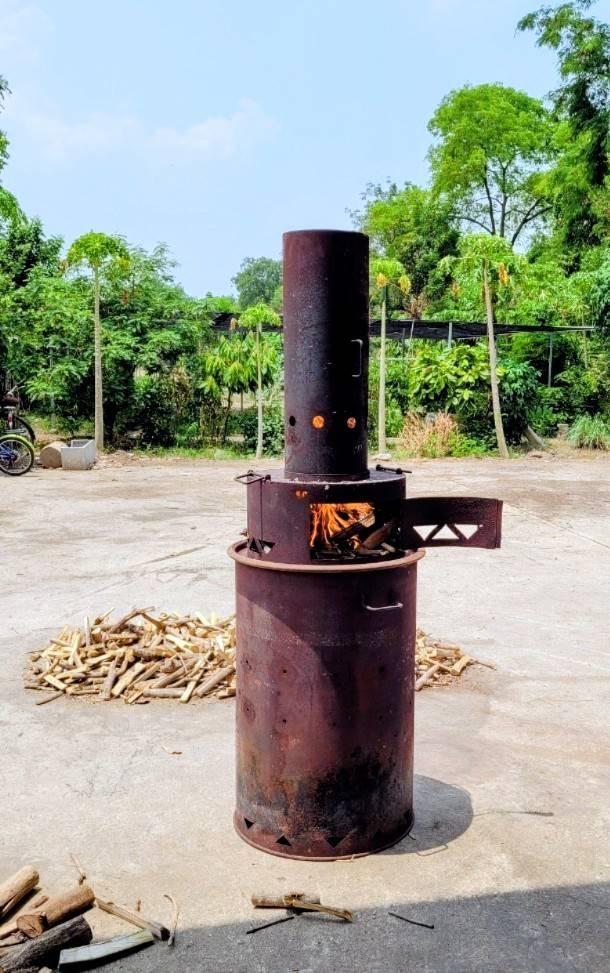
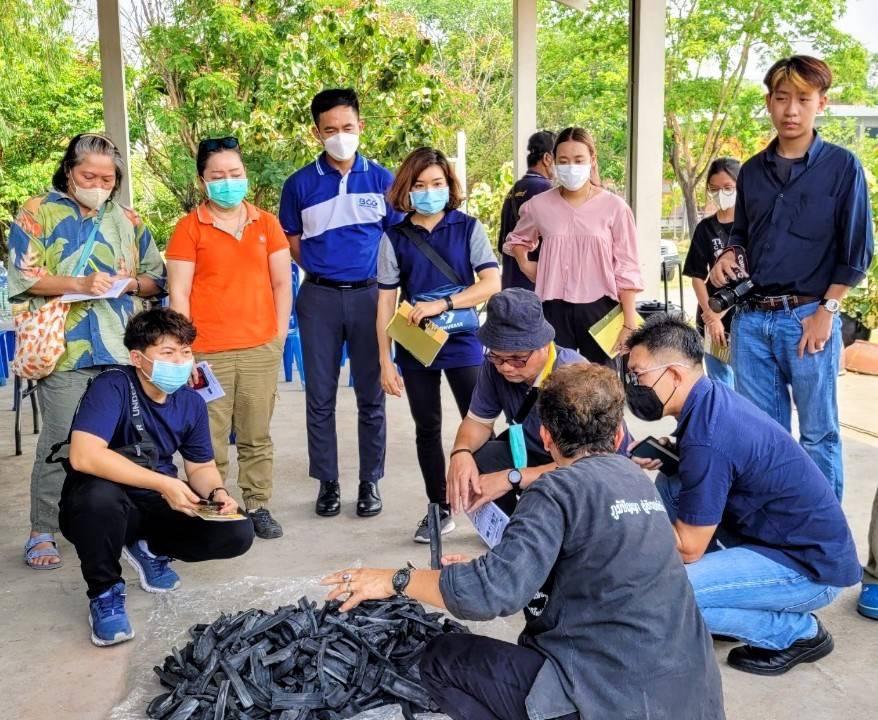
Biochar can be produced from branch clippings and agricultural waste, turning discarded materials into something useful — reducing the need for transportation and disposal.
02 — Mission: Reviving the Nation’s Most Treasured Trees
At historical sites across the country, large trees have often stood on that land for centuries, lending beauty and shade to the surroundings, and many carry fascinating stories of their own. Yet as the environment has changed and care has been given without proper understanding, the health of these trees has gradually declined.
In the past, reviving deteriorating large trees was typically done by improving the soil and adding fertilizer — but before long, the minerals would be washed away by rain or drawn out entirely by the tree itself. So it should come as no surprise to see many grandfather trees that have gone years without flowering or leafing out, some teetering on the edge of death, leaving many people to lose hope.
In late 2016, during the mourning period following the passing of King Rama IX, BIG Trees was contacted by the Bangkok Metropolitan Administration to help restore some of the tamarind trees at Sanam Luang, trees that were nearly a century old.
The challenge was significant. During a previous landscaping renovation of Sanam Luang, concrete had been poured right up to the base of the tamarind trunks, replacing the grassy ground — and the planting pits were found to be full of construction debris. BIG Trees addressed this by using an air spade to blow out the degraded soil, then refilling with fresh soil and a blend of soil amendments including biochar to restore nutrients.
Only a handful of trees were treated in the end, but it was enough to spark interest among other agencies, who invited BIG Trees to join restoration efforts at several other historic sites.
One of the most successful missions was the revival of the ancient golden iron-wood trees (Hopea odorata Roxb.) along the old city moat canal near Wat Ratchabophit. These are believed to be among the oldest large trees in the Rattanakosin period, with a legend that King Rama I had them planted to provide timber for dug-out canoes in case of war, and to serve as a defensive barrier before the city walls.
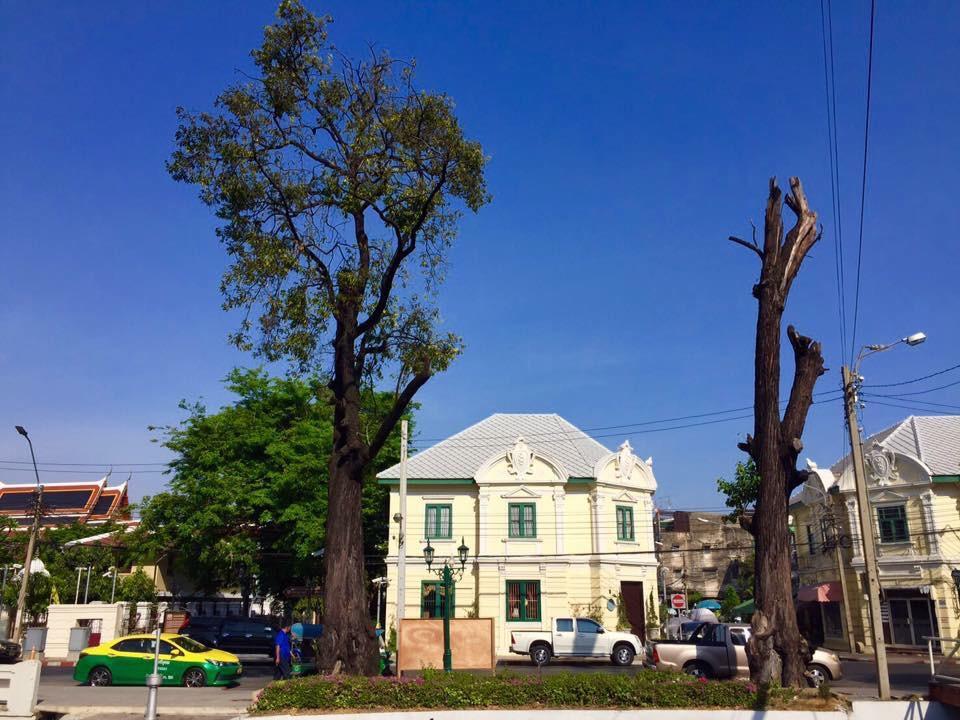
At the time of planting there were hundreds of trees, but after more than 200 years only four or five remain, and the numbers have been declining. Worse, the surviving trees were in a thoroughly weakened state. BIG Trees partnered with the Phra Nakhon District Office and the Bangkok Department of Environment, using an air spade to loosen and remove compacted old soil, then refilling with fresh soil, fertilizer, small gravel, and biochar, before laying porous bricks on the surface to allow water and air to permeate freely.
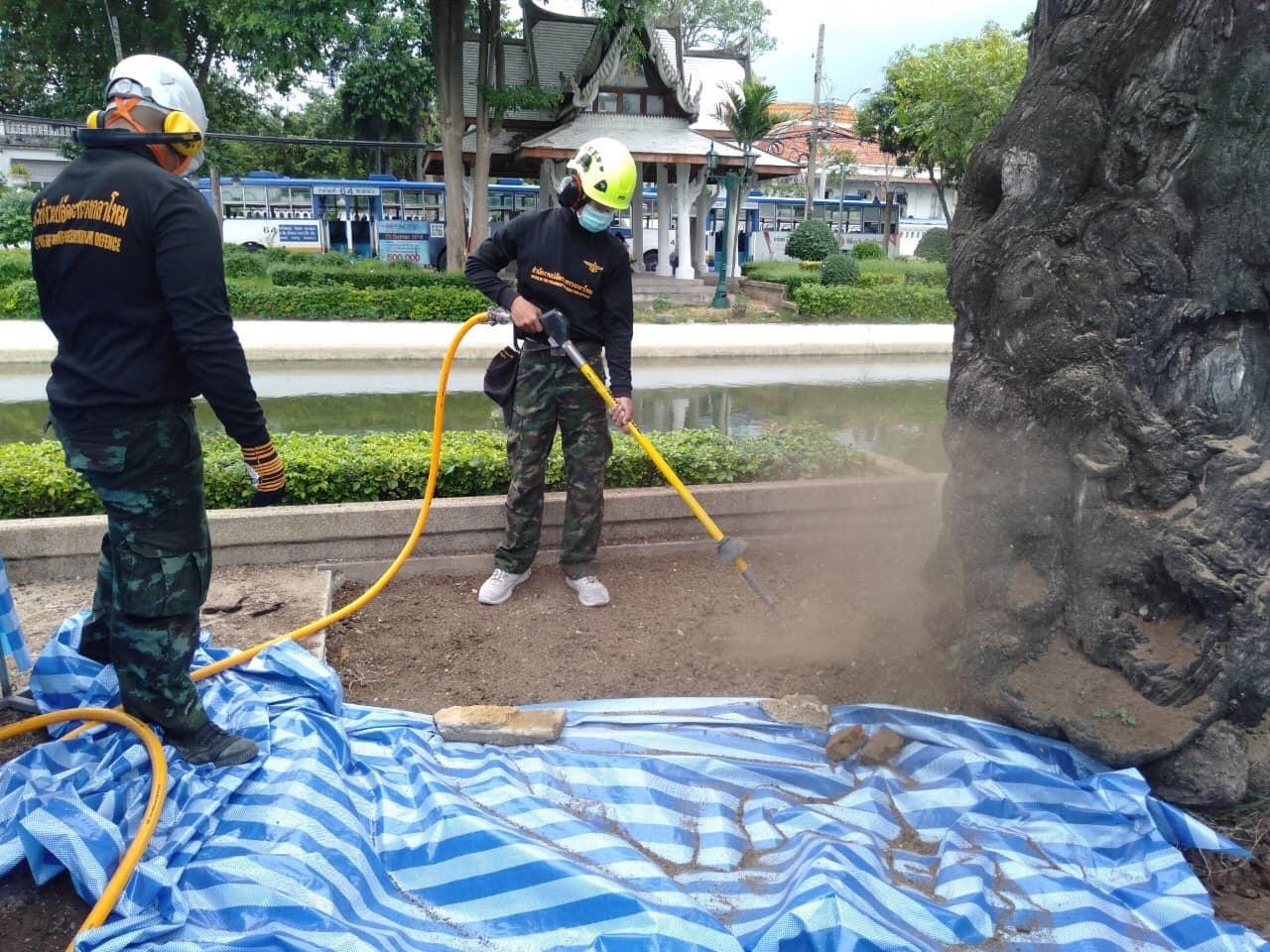
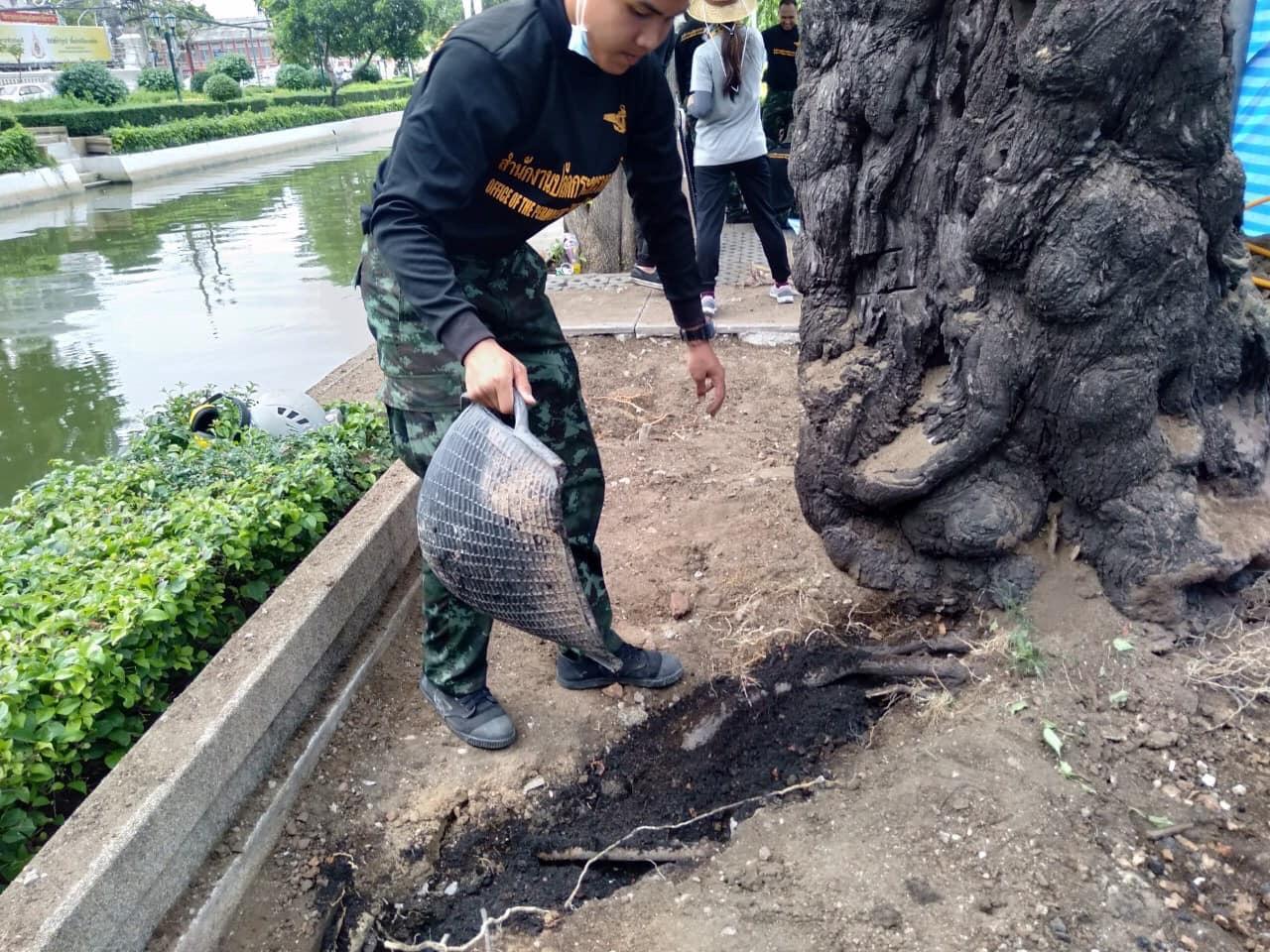
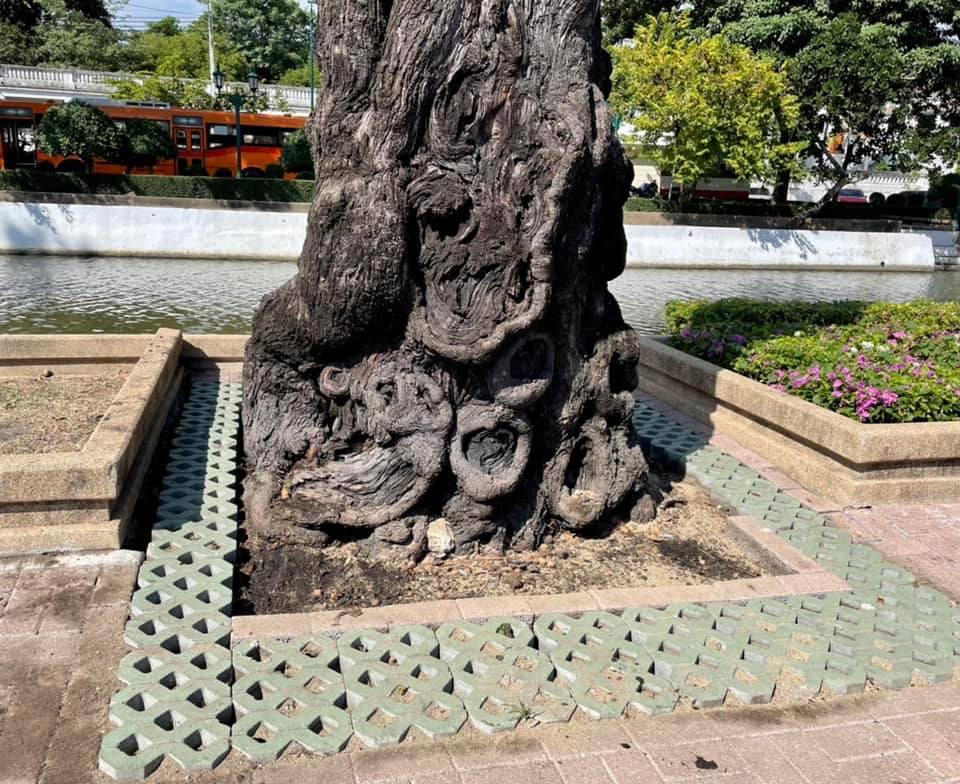
Biochar fermented with microbial solution was added to replenish nutrients for the ancient golden iron-wood tree, and the surface was laid with porous bricks.
With continued care, the grandfather golden iron-wood trees began recovering — new branches and leaves emerged, and after years without producing any fruit, they began bearing seeds once again. It was a hopeful sign that these historic trees might yet be preserved for generations to come.
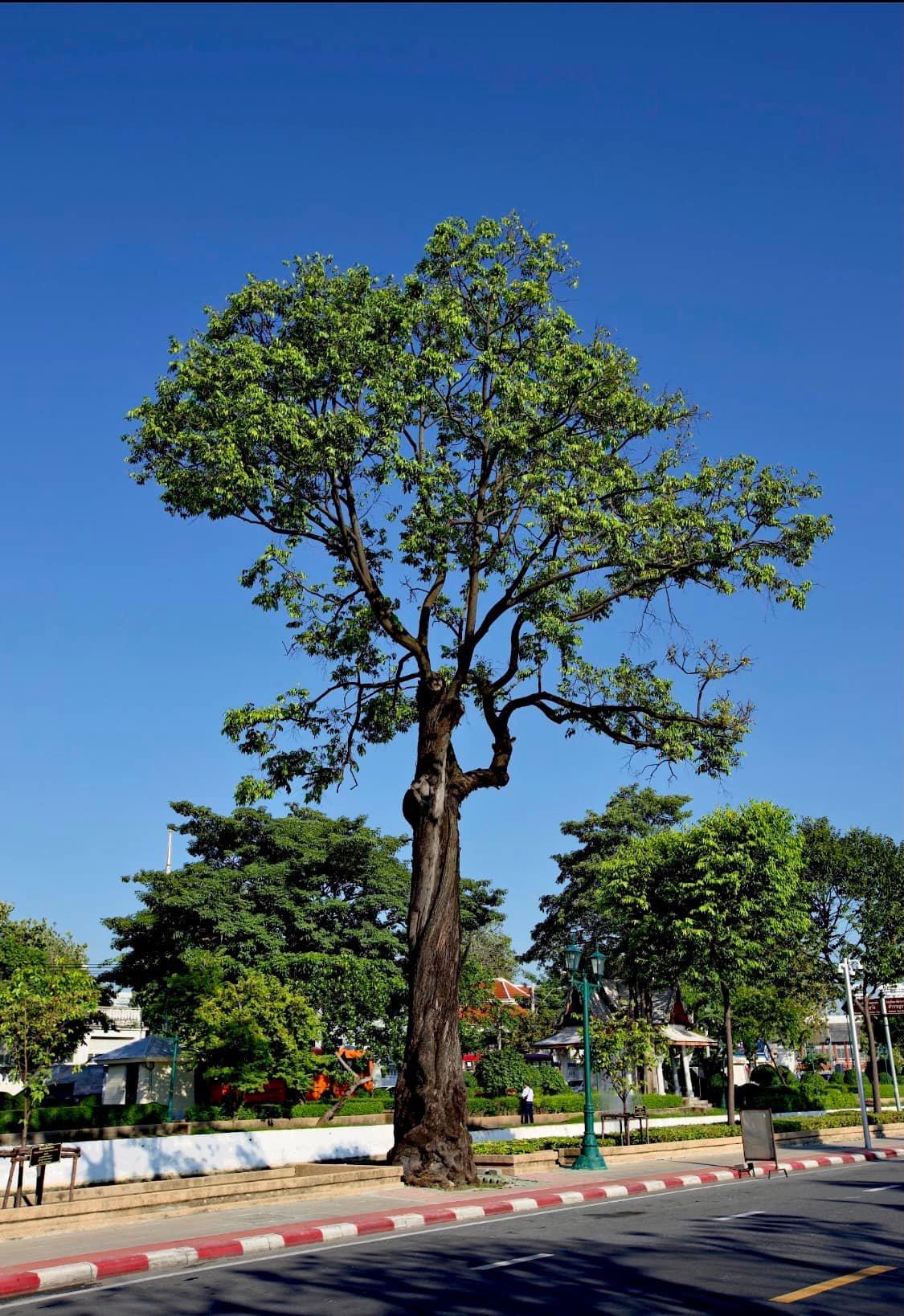
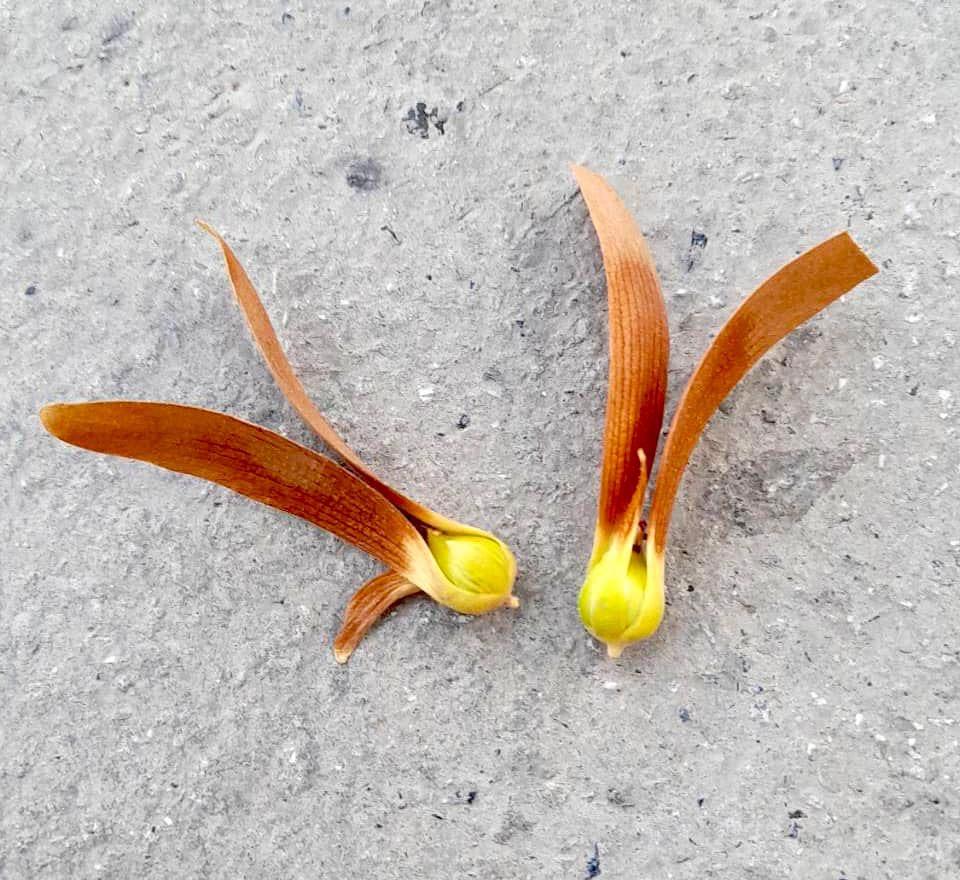
After restoration, the golden iron-wood tree regained its strength, sprouting new leaves and bearing fruit once again — for the first time in many years.
Another significant tree that BIG Trees helped restore in 2018 — together with the Urban Tree Care arborist team and tree specialists — was a Chan tree (Diospyros decandra) at Phra Narai Ratchaniwet palace in Lopburi Province. Believed to have been planted during the reign of King Narai the Great, the tree is estimated to be around 300 years old. The problem was severe: bricks had been built up around the base of the trunk, preventing the roots from spreading outward — so much so that the roots had pushed against the brickwork and cracked it.
The arborist team began by demolishing and removing all the surrounding brickwork, then used the air spade to blow out the old soil. Working in four sections — like slicing a cake — they took great care to disturb the existing root system as little as possible given the tree’s great age. Once each section was cleared and all the roots were visible, the tangled roots that might cause problems in the future were pruned. Fresh soil and fertilizer mixed with biochar were then added, and grass was laid over the surface.
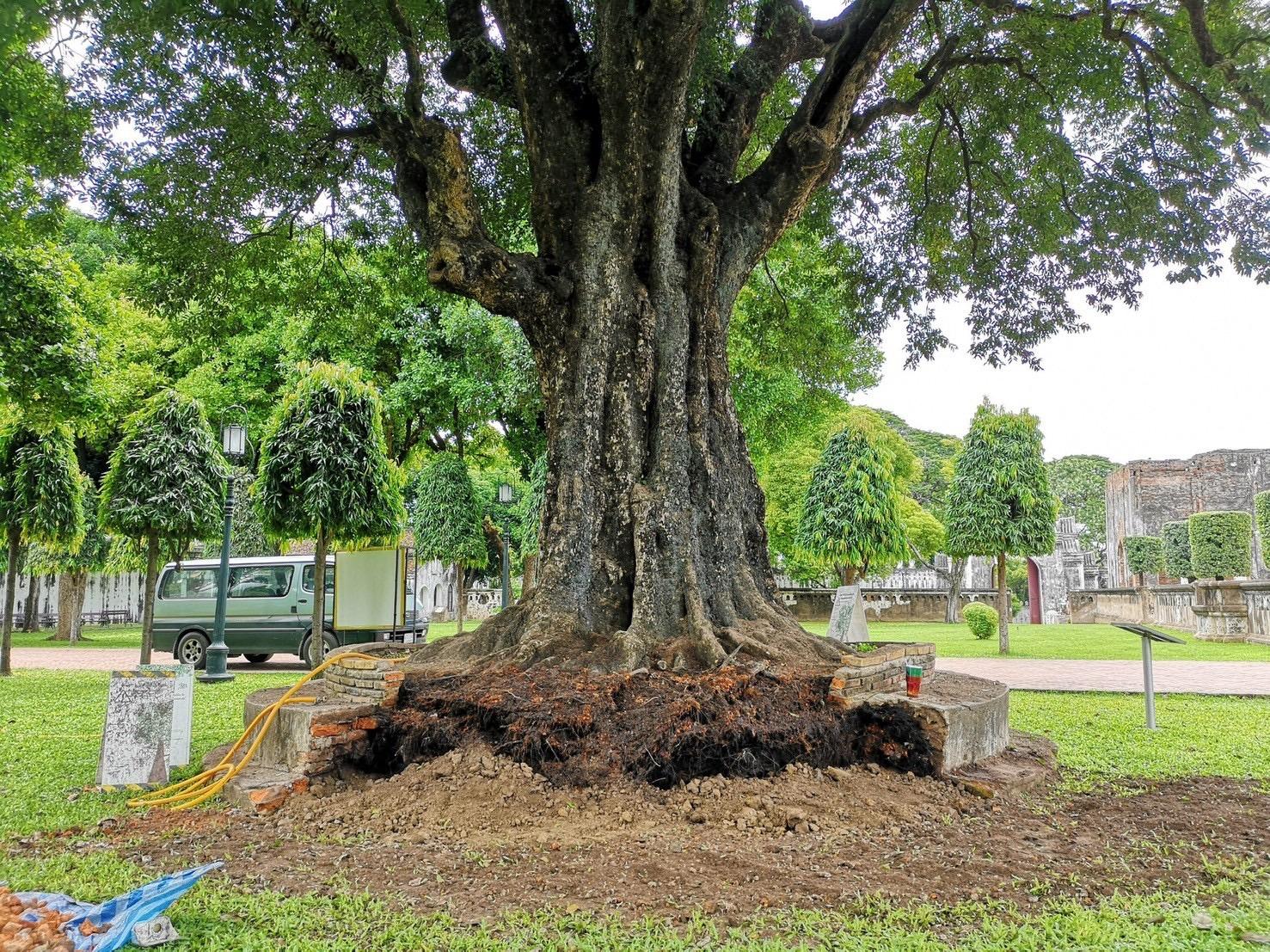
Critically, rope barriers were placed around the base of the tree to keep people from walking through and compacting the soil, which could damage the root system. Not long after the restoration, the Chan tree burst back into leaf, flower, and fruit for the first time in many years — vivid and full of life, as though it had been given an entirely new beginning.
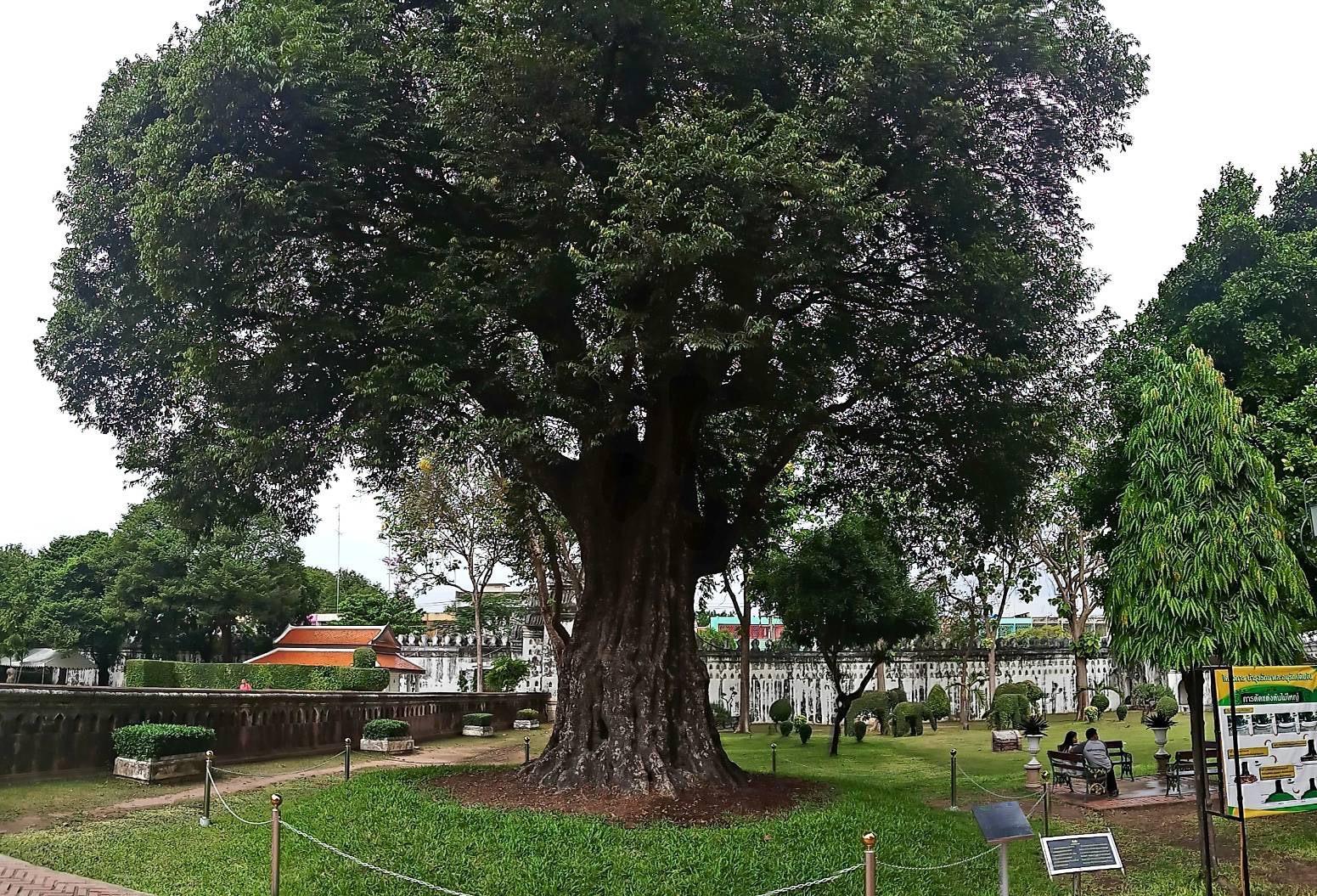
The same was true of a group of rain trees (Samanea saman) in Benchakitti Park. From the outside, there was no indication that anything was wrong with the root systems — but when the team used the air spade to clear the soil, they discovered the roots were overrun with larvae actively chewing through them. It was a sign that the root systems had grown weak, likely from overly compacted soil or a lack of nutrients, leaving the roots vulnerable to pest attack. Once the soil was improved, the grandfather rain trees put out more leaves and visibly regained their strength.
All of these cases speak to the remarkable power of biochar — its ability to harness materials from nature to restore a sustainable ecosystem for large trees once more.
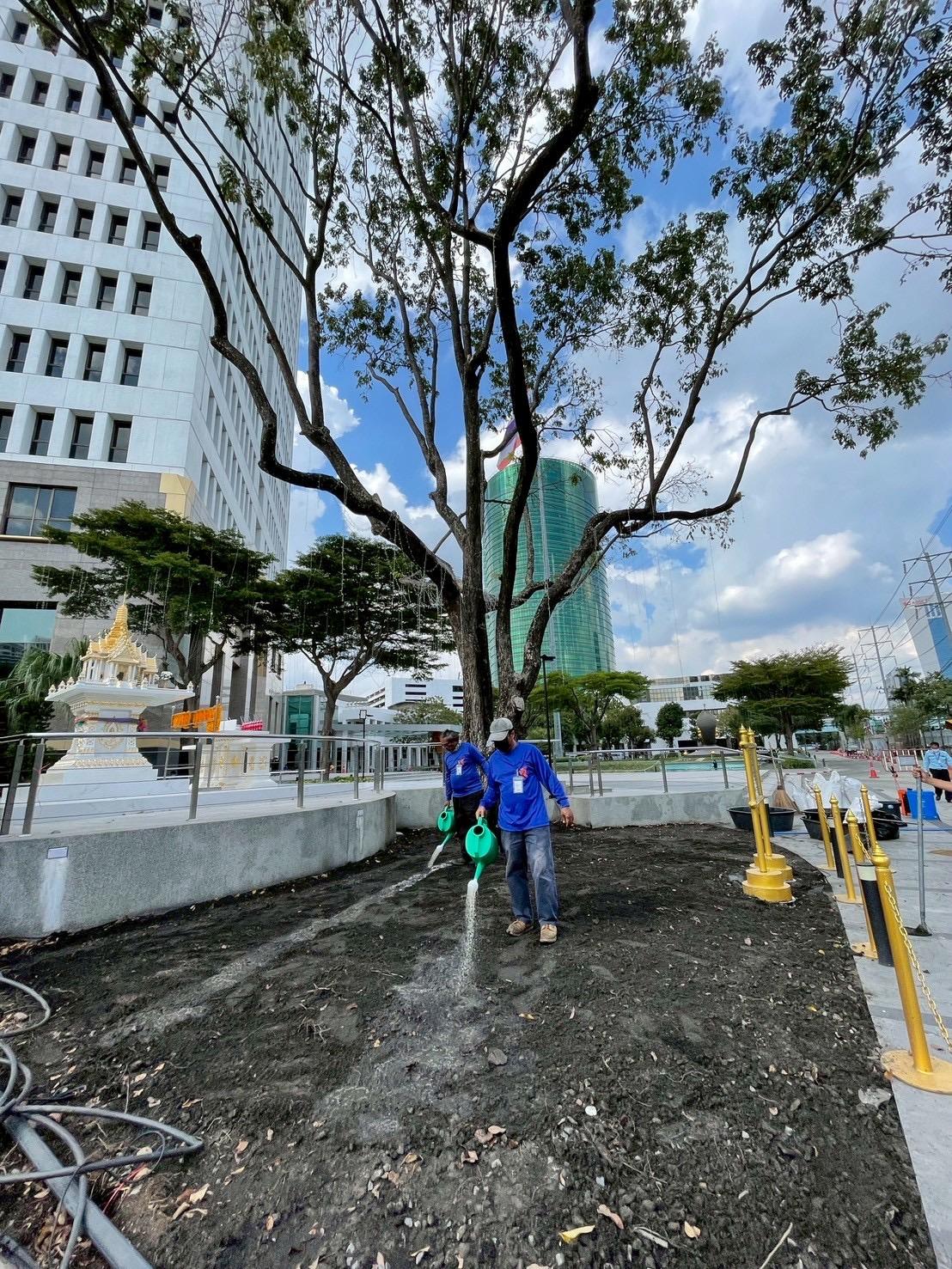
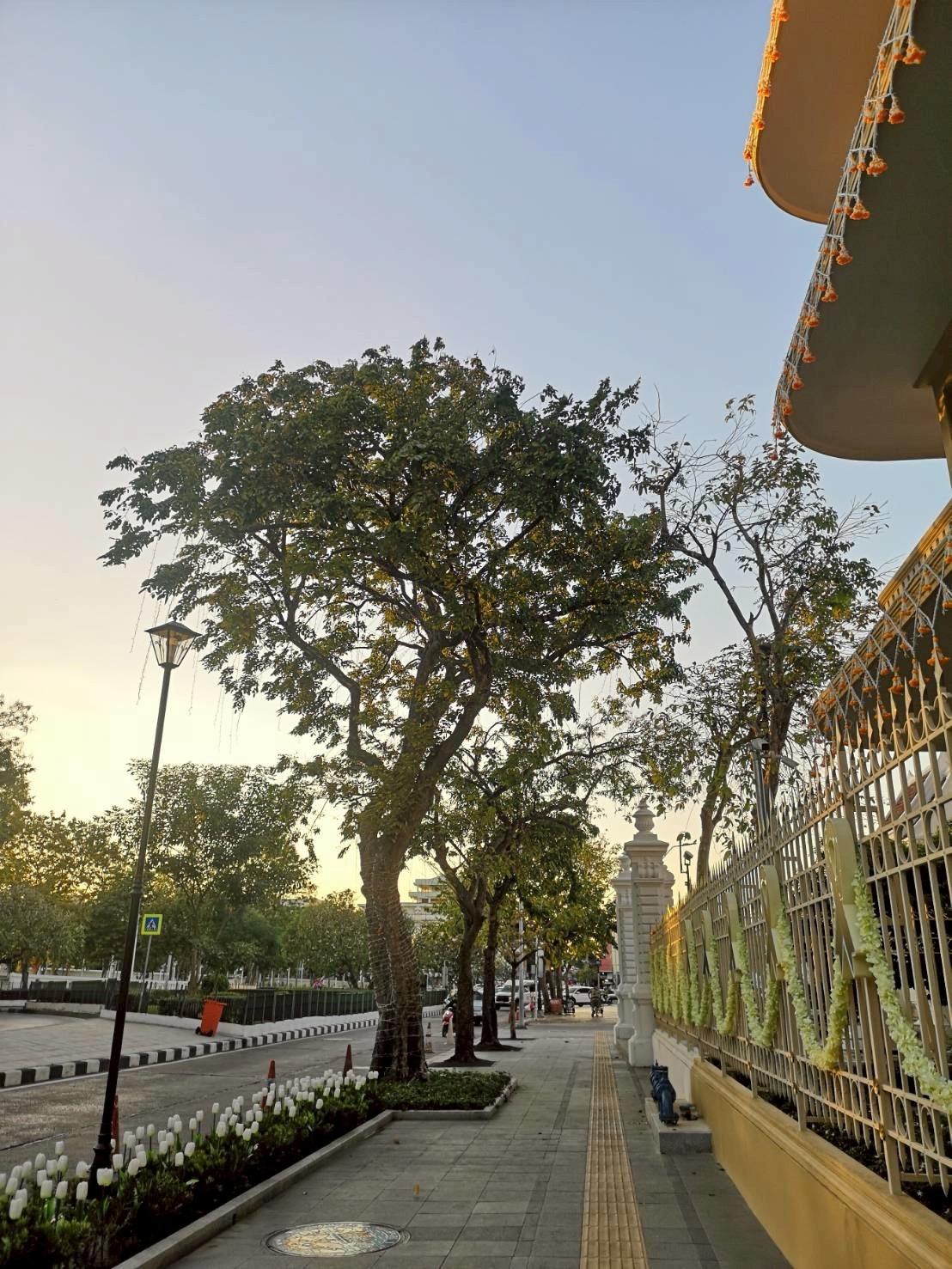
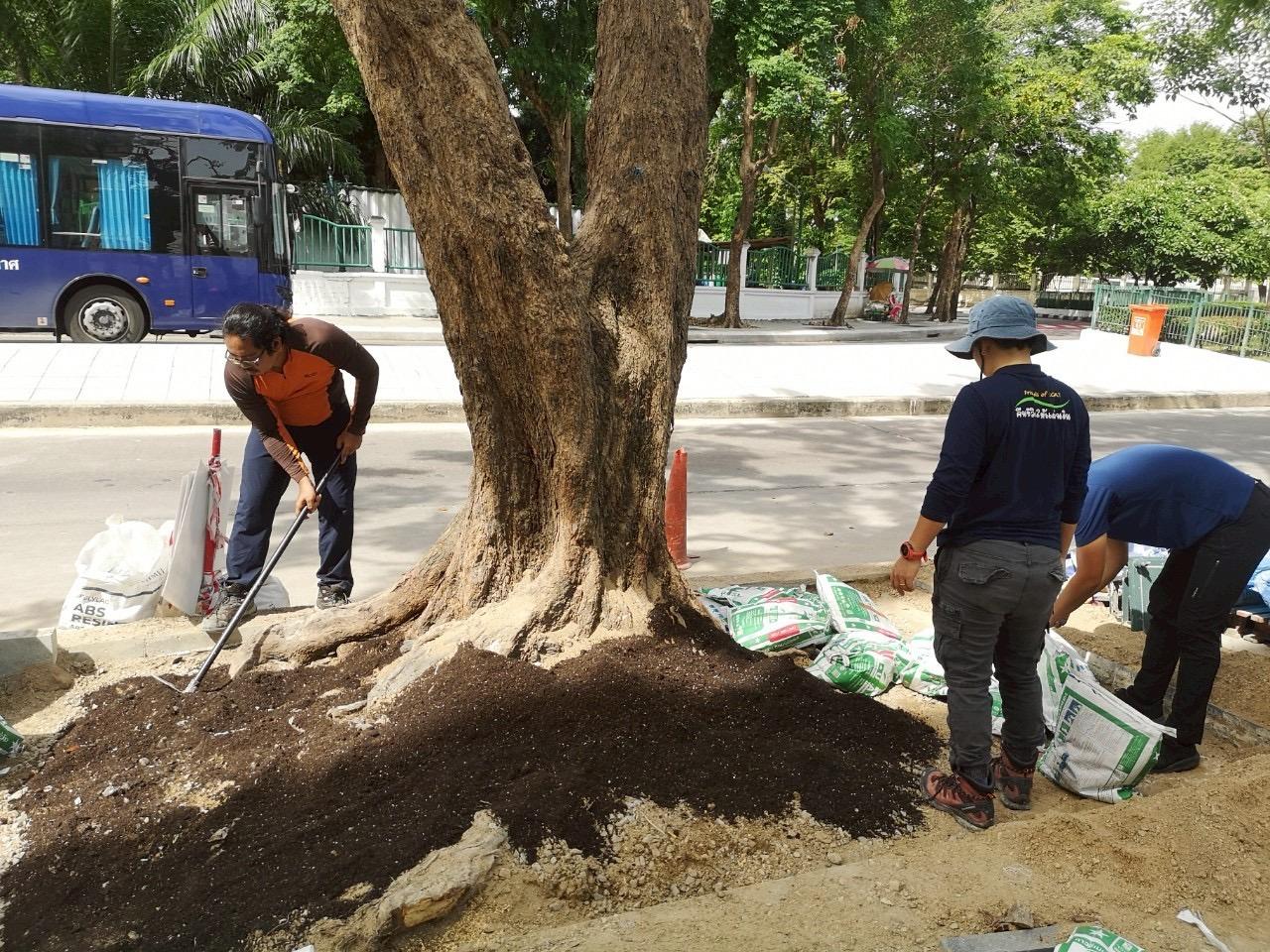
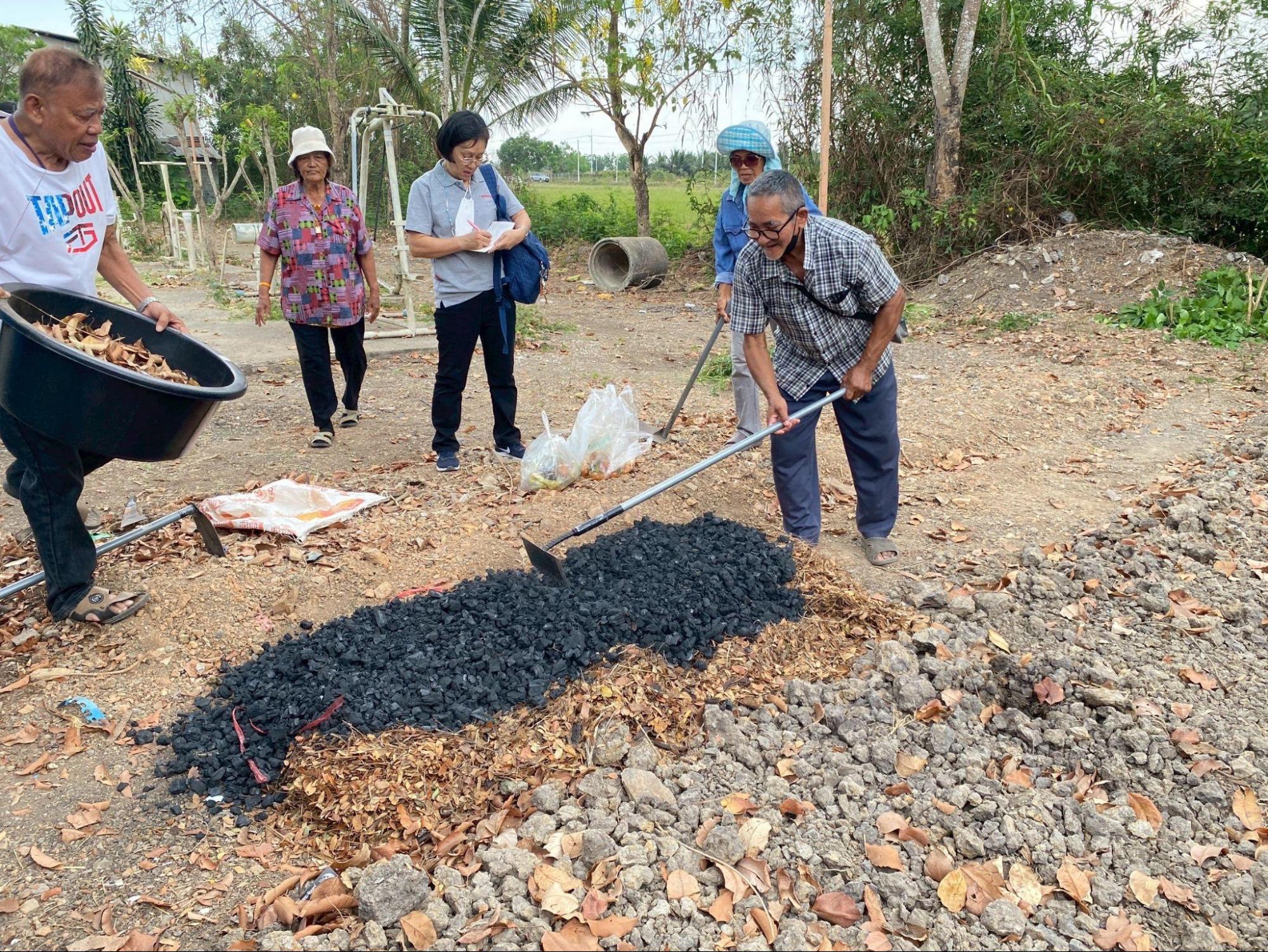
BIG Trees, together with its network of partners, continues to champion the use of biochar in restoring large trees across the country, as well as spreading knowledge on how biochar can be used to improve soil health.
03 — The Next Step Toward a Greener City
Today, biochar is seeing increasingly widespread use around the world. In Stockholm, Sweden, for instance, it is used to nourish trees, treat wastewater, and has even advanced to the point of being used in electricity generation.
In Thailand, producers have begun fermenting biochar with microorganisms and selling it as a tree care amendment, while newer kiln models are also emerging — easier to operate and capable of burning branches immediately without waiting for them to dry. Private companies such as ‘Wong Phai’ have adopted biochar production models alongside carbon credit sales, with the resulting income sustainably supporting the communities that produce it.
The ultimate goal that the BIG Trees team is pushing for alongside its network of partners is to get agencies like the Bangkok Metropolitan Administration, and local government organizations across the country, to recognize the value of pruned branch waste and establish systematic biochar kilns — distributed across different areas so that excess branches from tree trimming no longer need to be hauled to waste facilities, but can instead go directly to a kiln.
If achieved, the benefits would go far beyond simply saving enormous amounts of money on waste disposal and fertilizer purchases. It would also reduce the manpower needed for tree care, since nutrients would be retained in the soil for much longer. It would also directly support the Sustainable Development Goals (SDGs) that Thailand and the United Nations are committed to achieving by 2030 — because converting organic material into biochar and burying it in the ground sequesters carbon directly into the soil rather than releasing it back into the atmosphere, serving as one concrete measure against climate change. And crucially, it does so through a nature-based process — Nature-based Solutions at its core.
Biochar, then, is not merely the making of biological charcoal. It is one more way of restoring balance to the natural world — helping humans and all living things continue to thrive together, in harmony, for generations to come.
- ฮิต: 30